Stakeholder Impact Management Across the Business Value Chain

  • Home
  • Stakeholder Impact Management Across the Business Value Chain
Sappe conducts its business with an awareness of potential impacts on stakeholders throughout the entire value chain, from product development and design, raw material sourcing, manufacturing and quality control, warehouse management and distribution, to marketing, communication, and product delivery to consumers.

The Company systematically analyzes stakeholders at each stage of the value chain, considering both positive impacts and potential risks, alongside the expectations of key stakeholder groups, including employees, business partners, consumers, communities, government agencies, and investors.

This analysis is linked to the Company’s material sustainability topics to determine appropriate management approaches for each process, while enhancing positive impacts through the establishment of policies, measures, and key performance indicators aligned with the Company’s strategy.

The Company also regularly monitors and evaluates performance and provides communication channels to gather feedback, suggestions, and concerns from stakeholders. These insights are used to continuously improve operational processes under the principles of good governance and transparency.
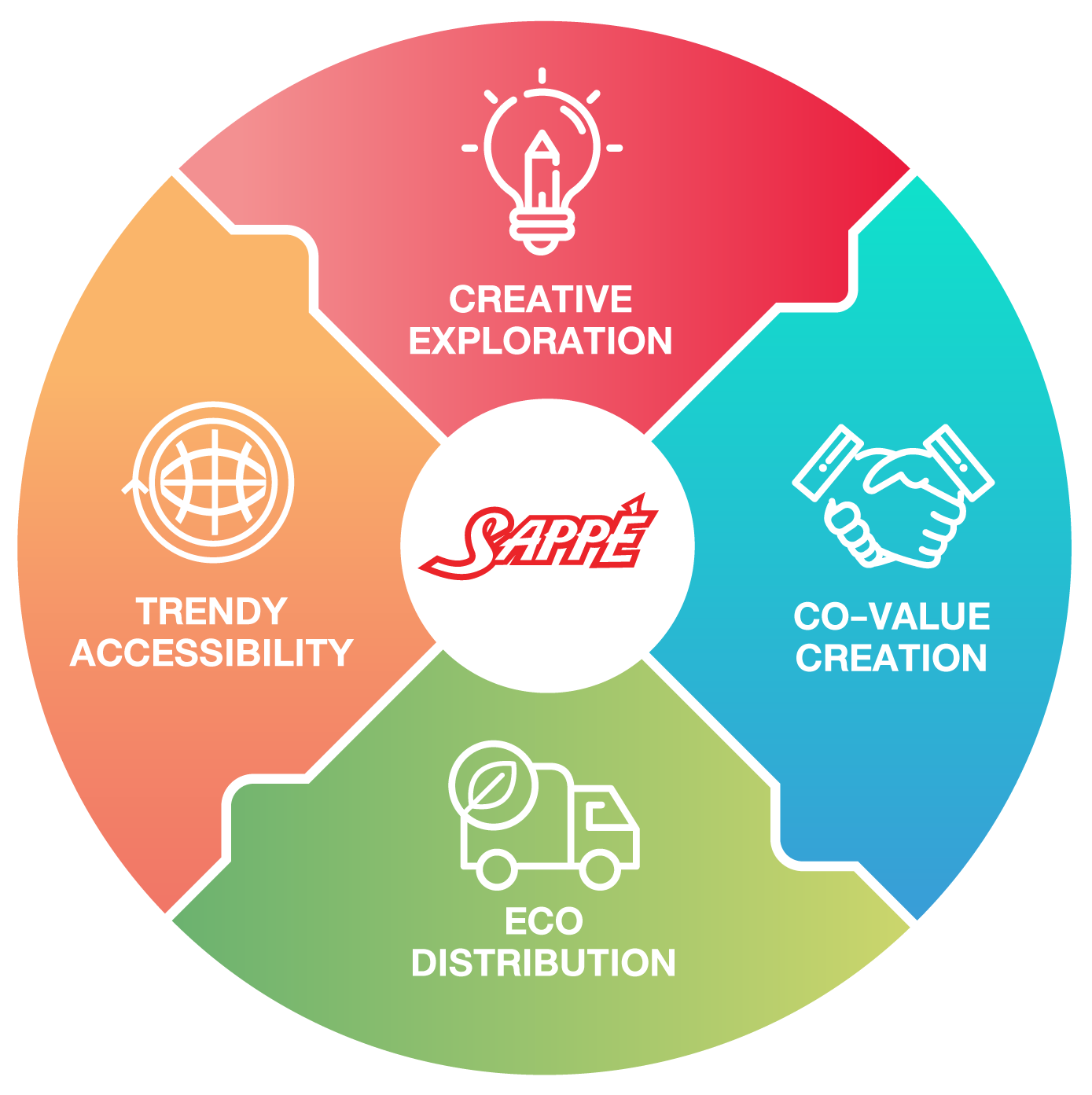

Integration of Sustainability Across

the Value Chain

CREATIVE EXPLORATION

TRENDY ACCESSIBILITY

CO-VALUE CREATION

ECO DISTRIBUTION

Stakeholder Engagement

SAPPE has conducted a stakeholder analysis across its entire value chain and identified five key stakeholder groups: employees, customers, business partners, investors, and communities and society. This analysis enables the Company to establish appropriate stakeholder management approaches based on stakeholder expectations and to develop effective communication channels tailored to each group, ensuring meaningful engagement, value creation, and responsive actions that address stakeholder needs effectively.
Employees

Expectations :

• Benefits
• Work-life balance
• Career advancement
• Workplace safety
• Fair compensation
• Access to information, company direction, and organizational engagement
Expectations + Revert -

Practices :

• Support appropriate employee benefits
• Promote a happy and enjoyable work environment (NPS)
• Encourage employee potential development
• Foster a safe working environment
• Implement a structured annual performance evaluation plan
• Ensure clear internal communication
Practices + Revert -

Communication Channels :

• Town hall
• Seminar activities
• Workshop
• Meeting
• Intranet
• HR Hotline
• Sappe Playground Facebook fan page
• Line Official Sappe Players
• Phone and Email
• Suggestion Box
• Feedback Board
Communication Channels + Revert -

Expectations :

• High Quality – Reliable and Trustworthy
• Delicious and Enjoyable Taste
• New and Unique Experience
• Helps Solve Health and Beauty Issues
• Great Value for Money
• Environmentally Friendly
Expectations + Revert -

Practices :

• Comply with quality manufacturing standards and regulations
• Research and develop new innovations to meet consumer needs
• Create products and innovations with social and environmental responsibility
Practices + Revert -

Communication Channels :

• Company Website, Facebook, IG
• Phone and Email
• Annual Report (Form 56-1 One Report)
• Annual Customer Satisfaction Survey
Communication Channels + Revert -

Expectations :

• Conduct business with fairness and transparency
• Promote sustainable business growth
• Respect intellectual property and copyright
Expectations + Revert -

Practices :

• Fair selection of business partners
• No disclosure of confidential business information without consent or legal authorization
• Consider equality and mutual benefits with business partners
Practices + Revert -

Communication Channels :

• Company Website, Facebook, IG
• Phone and Email
• Annual Report (Form 56-1 One Report)
• Annual Audit
• Meetings
Communication Channels + Revert -

Expectations :

• Returns, Sales, and Profit
• Transparent and Open Disclosure of Information
• Investor Relations Services
Expectations + Revert -

Practices :

• Summarize and disclose operational information to investors every quarter
• Disclose company information on the website
• Evaluate investor relations services
Practices + Revert -

Communication Channels :

• Annual Report
• Company Website
• Phone and Email
• Shareholders’ Meeting
• Investor Meeting Activities (Opportunity Day)
• Press Releases
Communication Channels + Revert -

Expectations :

• Waste management from the production process
• Participation in community activities
• Reducing the impact of business operations on the community
• Contributing to sustainable community development
• Helping stimulate the local economy
• Supporting and assisting in activities or crises
Expectations + Revert -

Practices :

• Comply with the Zero Discharge initiative
• Support various community projects, including religious, cultural, and environmental activities
• Assess community satisfaction with business operations and take corrective actions
• Support community projects in collaboration with the public and private sectors to strengthen the community
• Support projects that generate income in the community, including local employment opportunities
• Support and assist community activities, as well as provide aid during crises
Practices + Revert -

Communication Channels :

• Community and Social Affairs Officer (Sustainable Development Team)
• Company Website, Facebook, IG
• Annual Community Satisfaction Survey
• Phone and Email
• Company Complaint Channel
• Monthly Meetings with the Community and Local Authorities
• Line Application for Communication Between the Company and the Surrounding Community
Communication Channels + Revert -

Create your account

Reflects the process of product innovation and development, focusing on building business collaboration platforms, developing human capital, and promoting sustainable production and consumption. The Company emphasizes creating products that meet consumer needs while considering social and environmental impacts from the design stage.

Operations
Develop and deliver innovative, high-quality products that continuously respond to diverse consumer needs and remain accessible to consumers. At the same time, the Company seeks new partnerships and alternative opportunities to create unique product innovations, while enhancing product and packaging quality to be increasingly environmentally friendly.
Key Processes 
HR , R&D, Knowledge management / Sharing, SME, Inno studio (In house), JV / Collaborations
Stakeholders
Employees, Business Partners, Academic Institutions, SMEs, Government Agencies, State-owned Enterprises, and Communities
Related Sustainability Topics
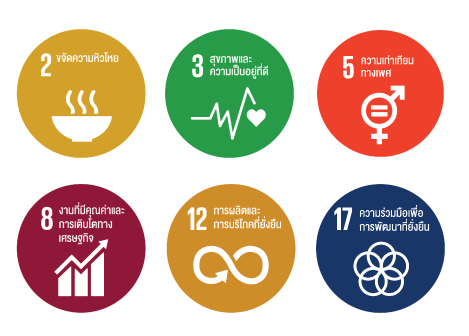
• Partnership and Collaboration: Building new forms of business partnerships and collaborations
• Strategic Innovation: Developing business innovations that create positive social and environmental impact
• Sustainable Agriculture: Promoting the sustainability of raw material sources
• Human Capital Development
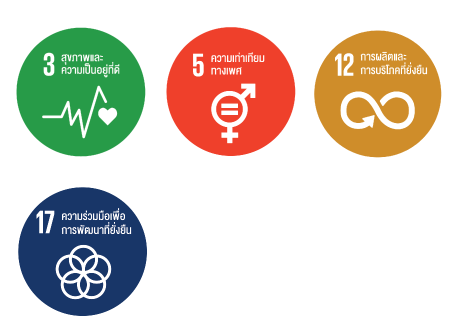
Good Health and Well-being
Carbon Footprint: Reducing greenhouse gas emissions
• Customer Insight: Leveraging consumer insights to support business development and innovation
• In-house Innovation: Fostering innovation generated internally by employees
• Customer Relations: Strengthening long-term customer relationships
• Responsible Consumption and Production

Focuses on responsible marketing and consumer access by developing diverse distribution channels, monitoring consumer trends, and communicating the brand in a creative and transparent manner to ensure that consumers can access quality and safe products.

Operations
Efficiently manage distribution operations by optimizing both energy consumption and delivery time, while expanding product accessibility through multiple distribution channels to maximize consumer reach. This ensures that high-quality products are readily available on retail shelves and delivered to customers, enabling them to enjoy delicious and nutritious products that contribute to an improved quality of life.
Key Processes
Modern trade, Traditional trade, Out of home, e-commerce, Brand Activation & Selling
Stakeholders
Employees, Business Partners, Government Authorities, Shipping Providers, Certification Bodies
Related Sustainability Topics
Good Health and Well-being
• Alternative Energy (e.g., solar energy, wind energy, and coal transition management) 
• Plastic Waste Management
• Greenhouse Gas Emissions Reduction (Carbon Footprint)
Affordable and Clean Energy
• Waste Management
 

Efficient production and inventory management

Operations
Efficiently manage production and inventory storage through the adoption of advanced technologies to optimize costs, maximize resource efficiency, minimize environmental impacts, and further enhance product quality and environmental friendliness.
Key Processes
Procurement, Production, Communities, Suppliers, and Warehouse Management
Stakeholders
Employees, Business Partners, SMEs, Government Agencies, State-Owned Enterprises, and Communities
Related Sustainability Issues
• Product development and continuous improvement of products, services, and innovative ideas
• Development of strategic innovations that create positive social and environmental impacts
• Decent employment and local economic growth Decent Work and Economic Growth
• Renewable and alternative energy (e.g., solar energy and wind energy)
• Greenhouse gas emissions reduction and Carbon Footprint management
• Waste management
• Water stewardship and Clean Water and Sanitation
Responsible Consumption and Production
• Sustainable sourcing and Sustainable Agriculture

Deliver products to reach the widest possible consumer base

Operations
Efficiently manage product distribution with a focus on optimizing energy use and delivery time, while expanding product accessibility through multiple channels to maximize consumer reach. This ensures that high-quality products are readily available on shelves and delivered to customers, enabling them to enjoy delicious and nutritious products that contribute to an improved quality of life.
Key Processes
Modern trade, Traditional trade, Out of home, e-commerce, Brand Activation & Selling
Stakeholders
Employees, Business Partners, Government Authorities, Shipping Providers, and Certification Bodies
Related Sustainability Topics
Good Health and Well-being
• Alternative Energy (e.g., solar energy, wind energy, and coal alternatives)
• Plastic Waste Management
• Greenhouse Gas Emissions Reduction (Carbon Footprint)
Affordable and Clean Energy
• Waste Management
• การใช้พลังงานสะอาด Affordable
& clean energy
• การจัดการของเสีย Waste management