

Material Sustainability Issues

  • Home
  • Material Sustainability Issues
SAPPE places strong importance on conducting a Materiality Assessment to identify key Environmental, Social, and Governance (ESG) issues that are material to the Company’s ability to create long-term value, as well as those that are of significant concern to both internal and external stakeholders. The Company systematically analyzes, evaluates, and prioritizes these issues to ensure alignment with its business strategy and sustainable operations.

Process to Identification Materiality Matrix

The organization’s sustainability materiality process is conducted through six main steps:
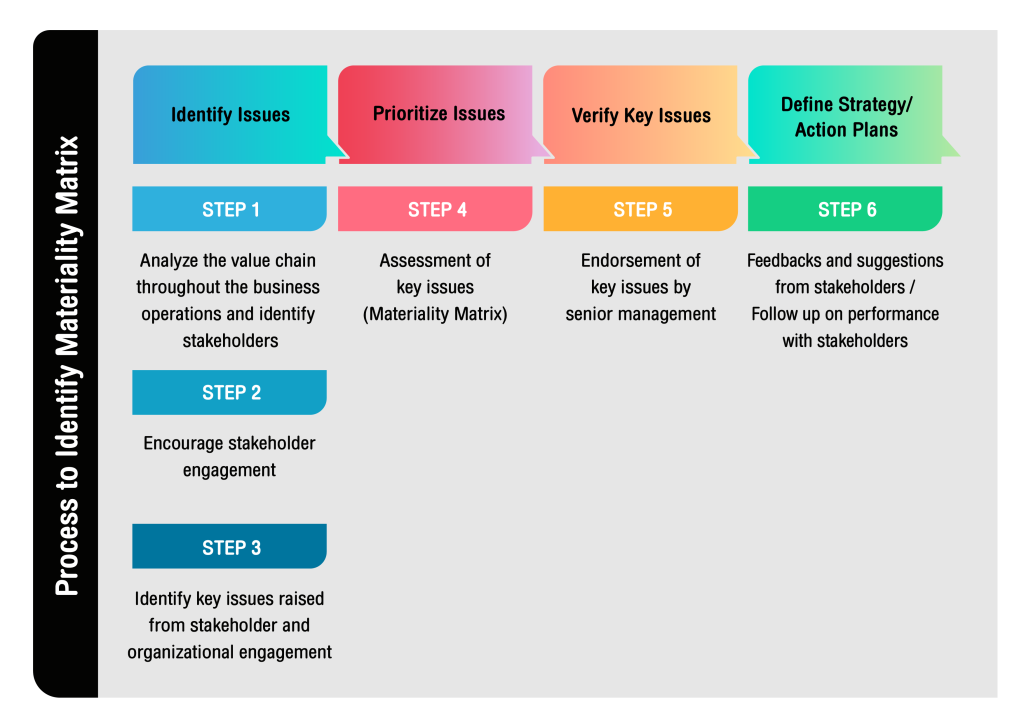
STEP 1

Analyze the Value Chain throughout the business operations and identify stakeholders:

ทำUnderstand business operations at every stage, from raw material sourcing to product or service delivery to customers,
in order to identify relevant stakeholders at each stage.

STEP 2

Encourage stakeholders’ engagement:

Provide opportunities for all stakeholder groups to share their opinions and suggestions,
ensuring comprehensive data that reflects real needs.

STEP 3

Identify key issues raised from stakeholders and organizational engagement:

Synthesize information collected from stakeholders and internal sources to identify issues that are significant
and impact the organization’s sustainability.

STEP 4

Assessment of key issues (Materiality Matrix):

Analyze and prioritize each issue based on its impact on the organization and stakeholders
to determine appropriate management approaches.

STEP 5

Endorsement of key issues by top management:

Present the evaluated issues to senior management for approval and support in implementation.

STEP 6

Feedback and suggestions from stakeholders and follow-up on performance with stakeholders:

Continuously communicate with and gather feedback from stakeholders, while monitoring and assessing performance
to improve strategies and/or operational approaches for greater effectiveness.

Materiality Matrix
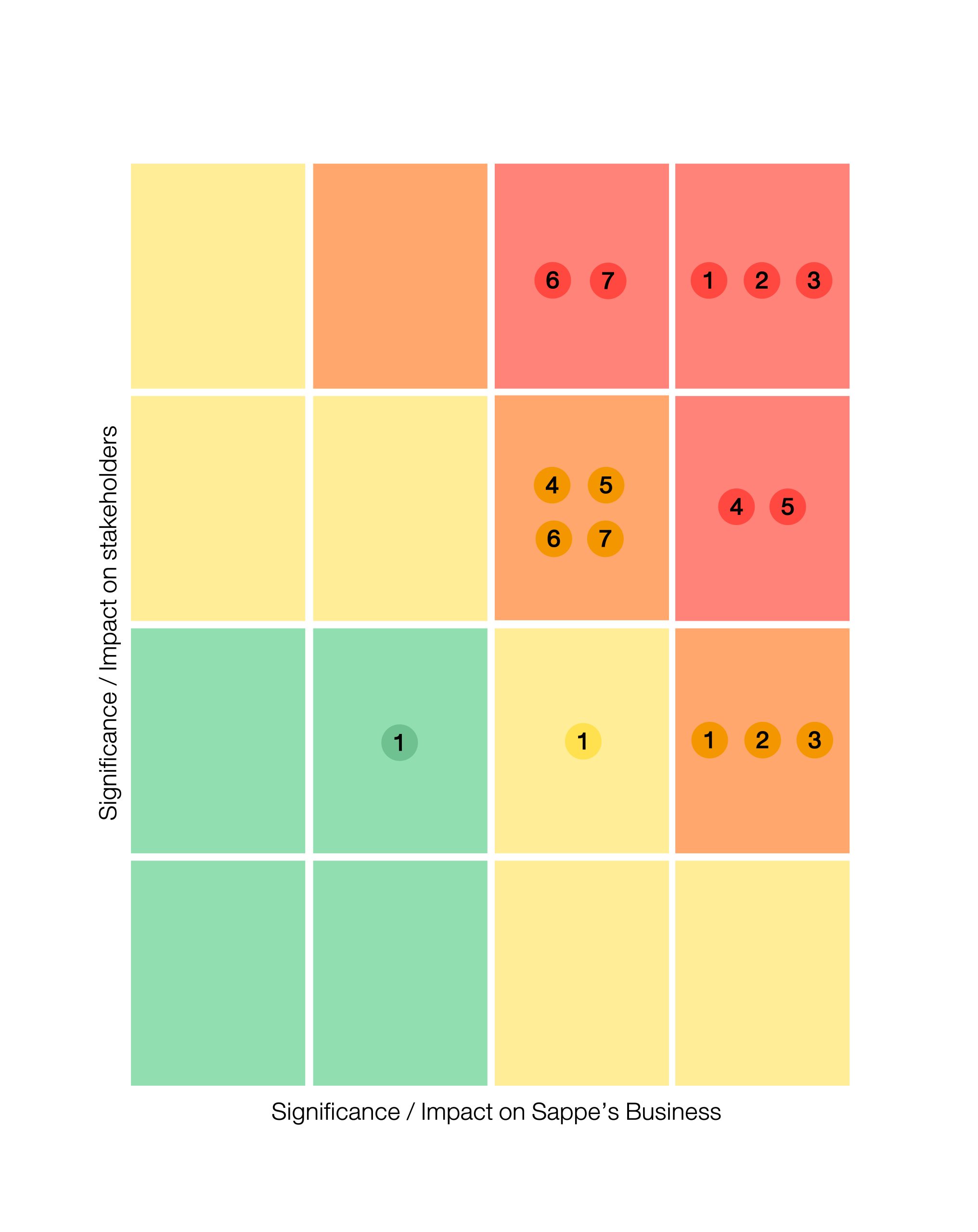
Very High Impact on Business and Stakeholders

1. Product Innovation & Responsibility          5. Sustainability Development
2. Water Security                                                      6. Healthy & Safe
3. Business Growth                                                 7. Responsible Marketing
4. Diversity, Equity & Inclusion                           8. Corporate Governance

High Impact on Business and Stakeholders

1. Good Health & Well-Being                              5. Partnerships for the Goals
2. Customer Insight                                                 6. Climate Change
3. Human Capital Development                         7. Diversity, Equity & Inclusion
4. Responsible Consumption & Production

Moderate Impact on Business and Stakeholders

Circular Economy Packaging

Low Impact on Business and Stakeholders

Waste Management
The company has conducted an assessment of the materiality of sustainability issues by considering both the level of impact on the company’s operations and the expectations and significance to stakeholders. This serves as a guideline for formulating strategies, managing, and systematically driving sustainability initiatives.
         The assessment found that issues of ‘very high importance’ and impact on the business and stakeholders include Product Innovation and Responsibility, Sustainability Development, Water Security, Health and Safety, Business Growth, Responsible Marketing, and Corporate Governance. These reflect the company’s key role in creating value for consumers, society, and stakeholders.
           Meanwhile, issues of ‘high importance’ include Good Health and Well-Being, Customer Insight, Human Capital Development, Responsible Consumption and Production, Partnerships for the Goals, Climate Change, and Diversity, Equity, and Inclusion. These factors support long-term business growth and strengthen the company’s competitiveness.
           Issues of ‘medium importance’ include Circular Economy Packaging, while issues of ‘low importance’ include Waste Management. The company continues to monitor and manage these areas to improve efficiency and mitigate potential impacts in the future.
           Overall, the results of this assessment are an important tool for guiding the company’s ESG initiatives, ensuring alignment with corporate strategy, stakeholder expectations, and long-term sustainable development.

Create your account